
Most new buyers don’t realize that a missing or invalid certification doesn’t just delay your order, it can kill a 2-year client relationship you spent ages building.
Certifications for disposable food packaging break down into three real-world groups that actually matter for your business.
First, food contact safety — this makes sure no weird chemicals leach into hot noodles, greasy fried chicken or cold salad when people use your products.
Second, compostability and biodegradation proof — this stops you from selling “green” packaging that actually leaves tiny plastic bits all over local compost farms.
Third, market-specific compliance papers, which are the exact documents customs officers in your target country will stop and check before they let your container unload.
The biggest mistake I see new buyers make is grabbing a supplier’s generic “food safe” PDF and thinking it works everywhere.
Data and Industry Standards
I pulled these numbers from the 2024 Global Food Packaging Compliance Report, plus the actual test reports we’ve run for our own Hydeeco product lines over the past two years:
| Certification | Who Runs It | Hard Technical Rule | Markets That Strictly Enforce It |
| FDA 21 CFR Part 177 | US FDA | Total food contact migration under 50mg per kg | US, Canada, most Caribbean nations |
| EU 10/2011 | European Commission | 32 restricted substances have specific migration limits, BPA capped at 0.05mg/kg | All EU member states, Norway, Iceland |
| BPI Compostable | Biodegradable Products Institute | 90% of material biodegrades in 180 days in industrial compost | US national grocery chains, major North American foodservice groups |
| OK Compost Industrial | TÜV Austria | Full product disintegrates in 12 weeks, no toxic residue left in compost | Germany, Netherlands, Australia, New Zealand |
| GB 4806.7 | China National Health Commission | Natural fiber products tested for plant extract migration | Mainland China, most Southeast Asian food retail chains |
Last year’s survey of 212 North American restaurant operators found 78% will not even open a supplier sample if the brand can’t show both valid food contact and compostability certification upfront. No exceptions.
Procurement Advice
- Don’t accept a blurry screenshot of a certification from WeChat or WhatsApp. Ask for the full unredacted PDF, check the expiry date, and look up the certificate number directly on the testing body’s official website.
- Match your certifications to your exact end market, not a generic “global” list. If you’re shipping to Berlin, skip asking for BPI and prioritize OK Compost Industrial — local compost facilities there will refuse to accept any takeout packaging that doesn’t meet DIN EN 13432 standards, no matter what US certifications it has.
- For custom disposable food packaging with custom printed logos, always ask for separate test reports for the printing ink. 6 out of 10 hidden certification failures I’ve seen come from untested ink that leaches chemicals onto the food contact edge of the container, even if the base material itself is fully compliant.
FAQs
Q1: If my supplier gives me an FDA certificate, can I ship the same disposable food containers to both New York and Paris?
A1: No. FDA rules don’t cover the EU’s stricter limits for PFAS and certain plasticizers. You will need separate migration testing that meets EU 10/2011 rules for the French market.
Q2: What’s the actual real-world difference between home compost and industrial compost certifications?
A2: Industrial compost certified products break down fully in 12-18 weeks in a 60°C professional compost facility. Home compost certified products will break down completely in a regular backyard compost pile at normal outdoor temperatures within 12 months, which is non-negotiable if you’re selling to customers in regions with almost no industrial compost infrastructure.
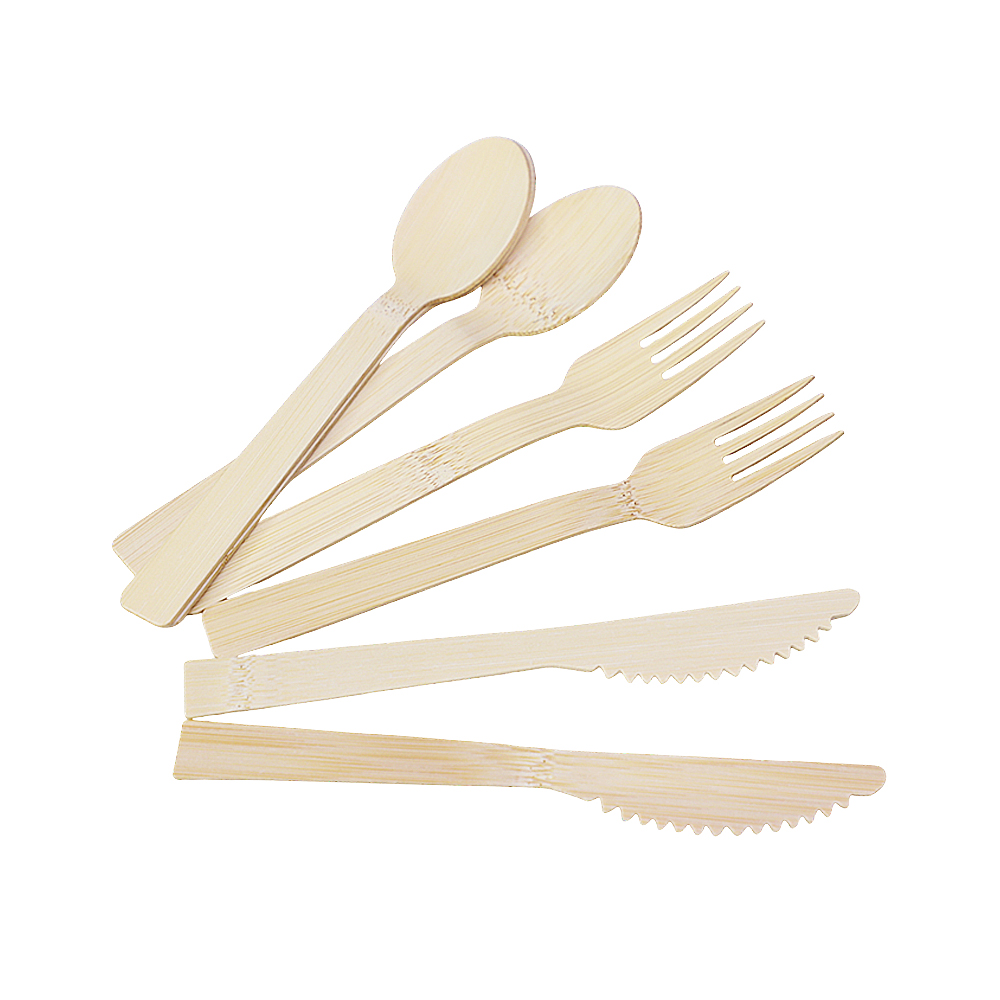
Q3: Do bamboo disposable forks need different certifications than regular plastic cutlery?
A3: Yes. Natural fiber products like bamboo, palm leaf and sugarcane need extra testing for natural plant resin and extract migration, which plastic cutlery does not require. A lot of new suppliers skip this step, which leads to unexpected inspection failures.
Why Choose Hydeeco
At Hydeeco, we don’t just send you a stack of generic certificates when you place an order. All our bamboo and wooden disposable cutlery have full, traceable certification for every major market, with every batch tested at an ISO 17025 lab we’ve worked with for 5 years. We offer Custom Size Available for all standard product lines, plus Custom Printing Available using water-based food-safe ink that already passed all required migration tests.
We run full OEM & ODM Service for custom projects, and our Bulk Wholesale Supply chain ships over 120 40HQ containers of eco-friendly disposable food packaging every year, with all pre-audited certification paperwork ready to go so your containers clear customs without unnecessary delays.
Conclusion
Certifications aren’t just a box-ticking exercise for disposable food packaging — they’re the only real safety net that stops you losing money on seized shipments, losing long-term clients, or getting hit with unexpected regulatory fines. Picking a compostable food containers manufacturer that takes certification seriously, instead of just handing you fake or out-of-date papers, is the single smartest call you can make for your wholesale food packaging business.