
If you’ve ever placed a bulk order for bamboo forks, wooden plates or wooden straws for your restaurant supply shop, you’ve definitely had this conversation with your supplier at least once. Someone on the team pulls up a product spec sheet, points at the certification line, and asks: “Wait, we’re shipping these to Berlin next month — does FDA even count there?”
This isn’t some boring compliance fine print. I’ve seen three separate small importers in the eco tableware space lose entire 40ft containers in the last two years over this exact mix-up.
What These Two Certifications Actually Mean For Your Stock
FDA food contact rules for disposable tableware aren’t some vague “safe to use” stamp. Under 21 CFR from the US FFDCA, every bamboo or wood item that touches food has to pass three simple migration tests: soaked in 10% ethanol for aqueous food, 3% acetic acid for acidic food, and heated vegetable oil for fatty food, all held at 40°C for two full hours. No weird chemicals can leach out over that threshold, and that’s the baseline you need to get any food packaging shipment through a US port.
LFGB, the German food and feed code, is a whole different bar. It’s the standard most of the EU actually enforces on the ground, not just the generic 1935/2004 EU framework. It doesn’t just stop at total migration — it tests for lead down to 0.01mg/kg, cadmium at 0.005mg/kg, formaldehyde, and even runs a blind smell and taste test. If the tester picks up even a faint odd woody or chemical aftertaste from the plate, the whole batch fails.
Real Side-by-Side Numbers You Can Use
| Test Rule | FDA US Standard | LFGB German/EU Standard |
| Total allowed migration | 50mg per kg of food | 10mg per kg of food |
| Lead migration cap | 0.1mg/kg | 0.01mg/kg |
| Formaldehyde limit | No mandatory standalone rule for natural wood | 3mg/kg hard cap |
| Test conditions | 3 food simulants, 40°C for 2 hours | 4 simulants, multiple time-temperature scenarios |
| Report validity | 12 months | 24 months |
No-Nonsense Buying Tips For Distributors
If 80% of your sales are in the US, stick to solid FDA certification first — that’s all you need for 99% of states and local health inspections.
If you ship even 20% of your stock to Northern EU, don’t waste time trying to get by with FDA-only paperwork. Local café chains and event planners will ask for LFGB before they even send you a quote request.
The smartest compostable food containers manufacturer buyers I know now order dual-certified stock as their default. It costs barely 1% more per unit, and you never have to turn down a last-minute order from a new market because your products don’t have the right papers.
FAQ — The Exact Questions My Buyers Ask Every Week
- If my bamboo plates are 100% uncoated natural wood, do I still need both certifications?
Absolutely. Even plain unprocessed wood straws count as food contact materials under both rules. You still have to prove no leftover farm pesticides or factory processing chemicals are leaching into food. A lot of new buyers miss this, and it’s the number one reason small shipments get detained. - Can I just get LFGB certification and use that for US sales too?
It will pass every FDA test, no question — LFGB is stricter across the board. The only catch is that US customs officers don’t automatically recognize LFGB reports as a substitute for FDA documentation. You’ll still have to submit a simple declaration, and you might get random extra checks at the port. It’s not worth the hassle if your main market is the US. - How much extra does dual certification actually add to my order cost?
For a standard run of 500,000 bamboo forks, the combined third-party testing adds roughly 1.2% to your total unit cost. Compare that to the 20-30% loss you take when a shipment gets rejected, and it’s not even a choice.
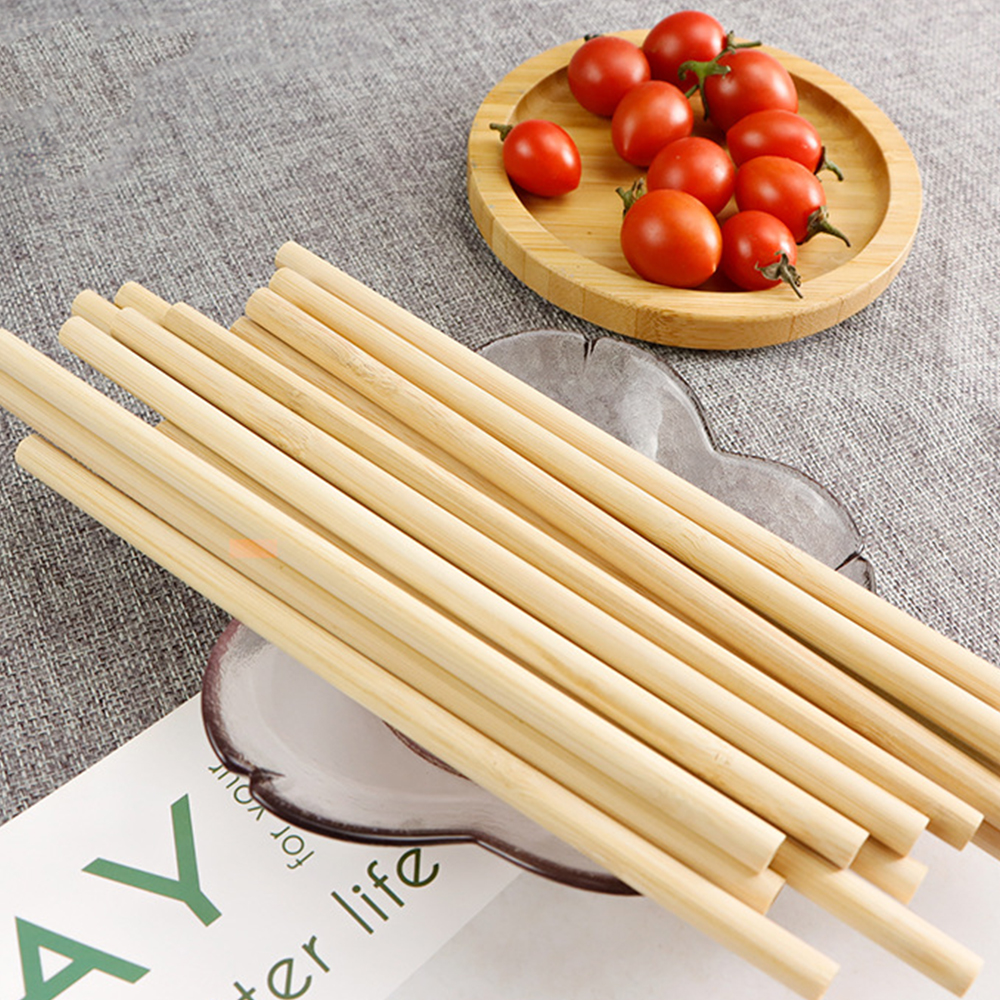
How Hydeeco Makes This Whole Process Easier
As a team that’s been making disposable bamboo cutlery, wooden plates and bamboo straws for B2B buyers for years, we don’t play games with certification paperwork. Every single item in our catalog comes with full, third-party verified FDA and LFGB reports, no hidden extra fees. We check every document against your destination country’s latest rules before your shipment even leaves the factory, so you never get stuck at customs.
We offer Custom Size Available, Custom Printing Available, Low MOQ Support, and full OEM & ODM Service for brands that want their own branded line of eco tableware. Whether you need a small trial run for a new café chain or recurring bulk wholesale supply for your distribution warehouse, we can adjust the compliance docs exactly to what your local inspectors require.
At the end of the day, certification isn’t just a stamp on a piece of paper. It’s the thing that keeps your shipments moving, your clients happy, and your wholesale food packaging business from wasting thousands of dollars on totally avoidable mistakes.