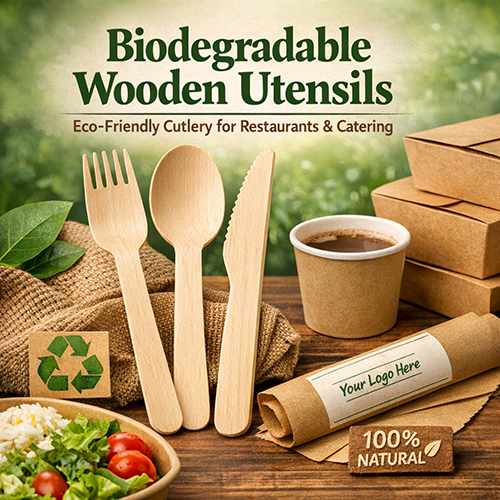

Bamboo cutlery provides businesses with a natural and durable single-use utensil solution as they transition from conventional plastic options.
How Bamboo Cutlery Is Made and What Sets It Apart
The manufacturing sequence begins with selecting mature bamboo stalks, often from Moso species known for their density.
Core Technical Specifications:
- Thickness generally falls between 1.7 mm and 3.0 mm, ensuring firmness and reduced flex during use.
- Heat resistance supports exposure up to 100°C or more for brief periods, surpassing many PLA options that lose structure near 60°C.
- Oil and water resistance performs adequately for standard serving lengths, although lower-quality versions may show limited absorption after prolonged contact.
- Natural decomposition typically completes in 60–150 days within industrial composting setups under suitable conditions. Numerous variants include supporting certifications for verified results.
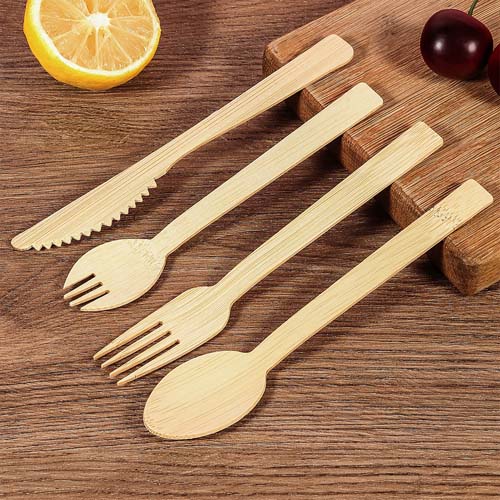
Such features allow effective use with warm Asian dishes, oily fast foods, or fresh salad servings where lesser materials often underperform.
Industry Data, Standards, and Side-by-Side Comparisons
Interest in green utensil alternatives continues to climb steadily. The bamboo cutlery segment, within the expanding biodegradable products sector, demonstrates consistent progress with anticipated annual growth rates of 7–9% heading into the 2030s. This momentum is driven by adoption from major restaurant groups, sports venues, and transportation providers pursuing credible environmental upgrades.
Material Performance Table
| Feature | Bamboo Cutlery | Birch Wood Cutlery | Standard Plastic |
| Renewal Period | 3–5 years | 15–30 years | Non-renewable |
| Heat Tolerance | Up to 100–120°C | Up to 90°C | Varies, melts easily |
| Oil Resistance | Good | Moderate | Excellent |
| Compost Time | 60–150 days industrial | 90–180 days | Centuries |
| Main Certifications | FSC, FDA, BPI, ASTM D6400 | FSC, FDA | Few |
BPI certification confirms alignment with ASTM D6400 and ASTM D6868 for proper composting behavior. FDA guidelines guarantee suitability for direct food contact, while PFAS limitations and EN13432 compliance are critical for access to European customers. FSC documentation validates ethical sourcing practices. Fulfilling these requirements facilitates smoother entry into strict markets and enhances credibility with end users.
Practical Advice for B2B Procurement
Smart buyers look beyond the sticker price. Key factors include:
- Unit cost versus total value, including brand reputation and compliance savings.
- MOQ — flexible suppliers accept orders from 5,000–10,000 pieces for starters, scaling to full container loads.
- Lead times of 18–35 days for standard items; allow extra for custom work.
- Container loading — a 20ft container can carry tens of thousands of units efficiently.
- Customization options like laser engraving or Pantone-matched printing. Vector files work best.
- Full documentation for certifications and export compliance.
Supply chain experience shows that rushing for the cheapest option often leads to splintering, warping, or missing paperwork. Test samples in actual use conditions. Check storage recommendations — dry, cool spaces preserve quality best.
A mid-sized U.S. catering group, for example, switched to certified bamboo and cut complaints about utensil failure by nearly half while strengthening their sustainability reports.
Frequently Asked Questions
How does bamboo cutlery hold up with hot or oily foods compared to alternatives? It performs reliably up to 100°C+ and manages grease well for typical serving times. Its natural density often beats PLA, which softens faster, and matches or exceeds many wood options.
What certifications should wholesale buyers demand from a compostable food containers manufacturer? Look for FDA food-contact approval, BPI (linked to ASTM D6400), FSC for sourcing, and PFAS-free statements. EN13432 helps with EU market access. Always request current test reports.
What MOQ and lead times are realistic for custom disposable food packaging orders? Many factories start at low MOQ for standard designs and scale up. Expect 18–40 days total, depending on printing and volume. Discuss timelines early to avoid surprises.
Is there any taste transfer or hygiene issue with bamboo utensils? Properly processed bamboo stays neutral and meets strict hygiene standards. Store it dry and use within normal shelf life for best results.
Why Work with Hydeeco.com
Hydeeco.com serves as a dependable eco friendly food packaging supplier focused on quality bamboo cutlery and related solutions. Our line emphasizes consistent strength, clean finishes, and full regulatory backing — helping clients operate smoothly across regions.
Buyers value our attention to detail, from material selection to final packaging, making us a practical partner for both standard wholesale food packaging and specialized needs.
Custom Manufacturing Capabilities
We provide custom size, custom printing, low MOQ support, OEM & ODM service, and bulk wholesale supply for global buyers. Our team supports tailored specifications for custom disposable food packaging to fit your exact business requirements.
Conclusion
Take time to review samples, certifications, and supplier reliability. Choosing the right partner like Hydeeco.com helps turn sustainability goals into everyday operational advantages.