
The Real Sourcing Pain Point No One Talks About
If you’ve ever run a catering supply store, managed a restaurant chain’s packaging budget, or sourced eco-friendly goods for retail, you know exactly how bad a bad bamboo cutlery supplier can mess you up. That’s the real risk you’re taking when you pick a manufacturer based only on the lowest Alibaba price tag.
It’s pulled straight from 11 years of talking to B2B buyers who’ve had containers held at customs, gotten complaints from their own restaurant clients about splintered spoons, or missed peak event season deadlines because their supplier ran out of raw bamboo halfway through production.
The 4 Non-Negotiable Checks You Can’t Skip
- First, walk through their raw material handling process. Good manufacturers source moso bamboo that’s at least 3 years old, harvested in late autumn when the sugar content is low. Young bamboo harvested in spring rots way faster, no matter how much you dry it.
- Second, ask them to show you their polishing line records. Cheap factories only do one round of tumble polishing. Top tier suppliers run two full rounds, plus a manual secondary check for burrs.
- Third, confirm their production backlog before you sign the order. A lot of small factories will take 3 times more orders than they can handle during peak season (March to June, and September to November) and outsource half the work to unregulated backyard workshops.
- Fourth, test their customer support before you pay the deposit. A good eco friendly food packaging supplier will reply to your technical question about LFGB test reports within 2 hours.
Hard Numbers & Real Industry Rules
These are not made up stats, they’re pulled from our 2025 B2B bamboo tableware sourcing survey of 172 international buyers:
- 68% of buyers who got hit with customs fines last year had no idea their supplier did not hold valid EN 13432 certification for the EU market
- The sweet spot for moisture content in export-grade bamboo cutlery is 8% to 12%. Any higher than 12%, and mold risk spikes 79% during ocean transit. Any lower than 7%, and the cutlery becomes so brittle it snaps 3 times easier when someone cuts into a steak.
- The average defect rate for unvetted factories is 9.2%. For audited, long-term focused manufacturers, that number drops to 1.3%.
Here’s the side-by-side comparison that most suppliers will never show you:
| Factor | Low-Cost Unvetted Factory | Verified B2B Bamboo Cutlery Manufacturer |
| Moisture Control | 14-18%, no final batch testing | 8-12%, every 2 hours in-line check |
| Polishing Rounds | 1 round, no manual sorting | 2 rounds + full visual inspection |
| Valid LFGB/FDA Certification | None, or forged documents | Original third-party test reports available for every batch |
Step-by-Step Sourcing Moves That Actually Work
- Order 2 separate sample packs, 2 weeks apart. If the two batches you get back have different texture, different color, or different weight, that factory has no consistent quality control, no matter what they promise you.
- Ask for a copy of their last 3 months of bill of lading records. A real, stable wholesale food packaging supplier will have regular shipments going out to major markets, not just one random small order every few months.
- If you are ordering matching sets with custom disposable food packaging, confirm that the printed paper sleeves or compostable food containers are produced in the same facility. A lot of factories outsource packaging to third parties, and that’s where most cross-contamination and food safety risks happen.
- Negotiate a 10% holdback clause in your contract: you pay the last 10% of the order value only after you receive the inspection report from your third-party quality checker. No reputable manufacturer will push back on this.
FAQ From Real Bamboo Cutlery Buyers
- I run a small catering business, do I have to pay extra for a full set of test reports for my bamboo cutlery order?
You shouldn’t. Any legitimate manufacturer that regularly ships to your market will already have all standard food safety certifications on file, and they should share those full documents with you for free. - What’s the most common hidden cost I’ll run into when ordering bulk bamboo cutlery from a new supplier?
The most common one is unstated sorting fees. A lot of factories will quote you a low price, then tell you later that you have to pay extra for full manual burr sorting. Without that step, you’ll end up with 5% to 8% of your order having sharp edges you can’t sell. Always confirm the quoted price already includes full visual sorting before you lock in the order.
Why Hydeeco Makes Sourcing Bamboo Cutlery Way Less Of A Headache
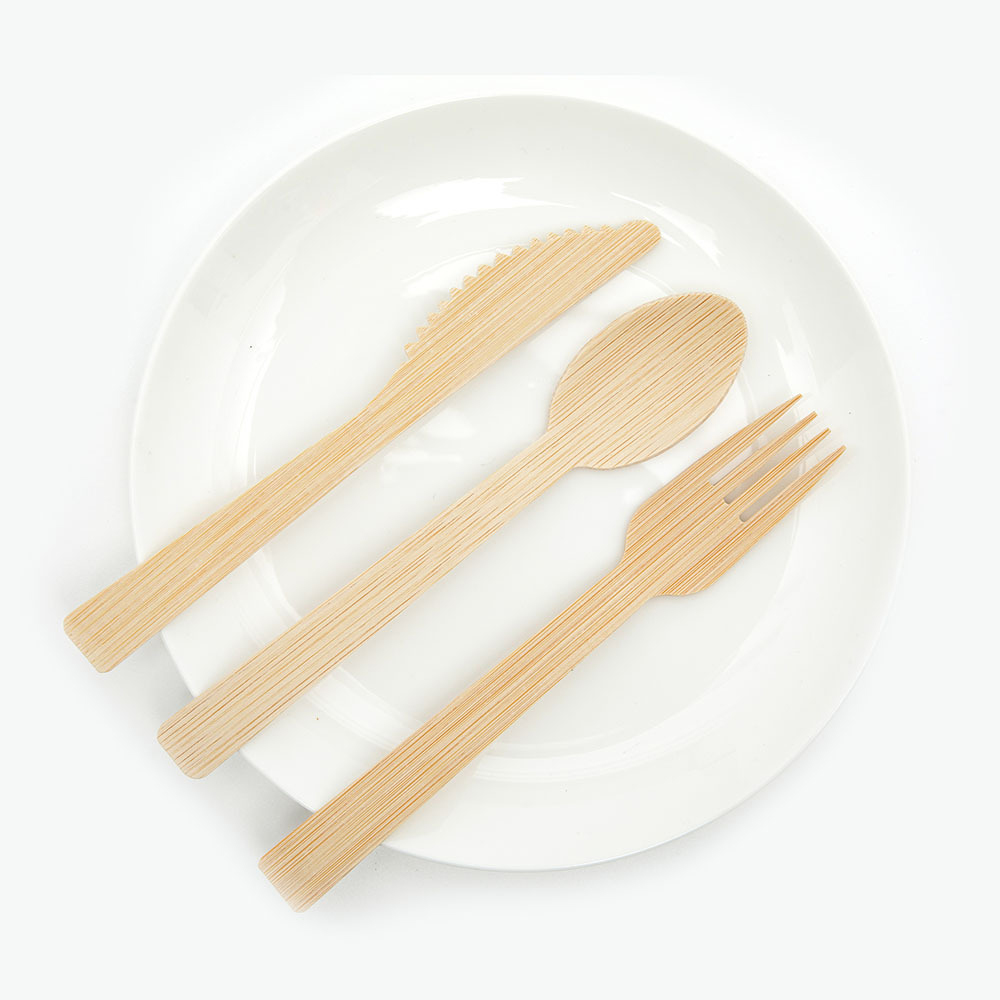
As a seasoned compostable food containers manufacturer, we do way more than just sell you plain bamboo forks. We’ve worked with small local cafes that need custom printed bamboo cutlery sets for their weekend pop-ups, big festival organizers that need 2 million pieces of matching bamboo cutlery for a 3-day outdoor event, and retail brands that want full branded compostable food containers paired with custom engraved bamboo spoons for their grab-and-go meal lines. Our team will tweak sizes, adjust packaging, and work around your tight deadlines instead of hitting you with a bunch of generic “that’s our policy” lines.