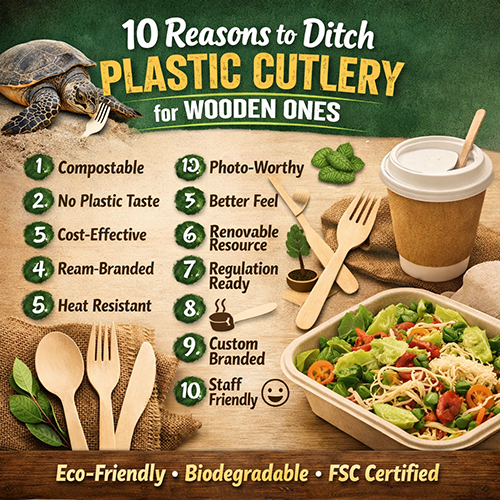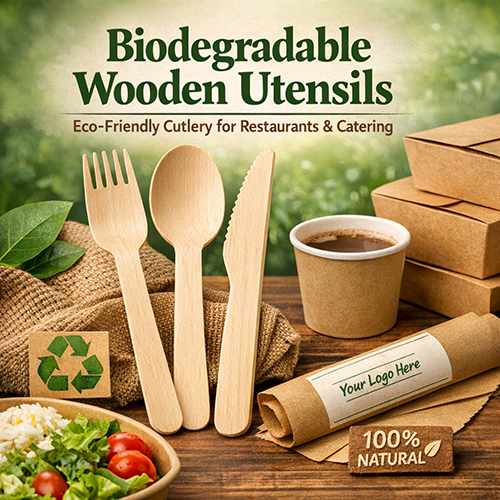

Over the last two years, the global shift away from single-use plastics has pushed bamboo utensils to the forefront of the eco-friendly disposables market, with order volumes for certified products rising 62% across North America and EU markets.
Unlike mass-produced plastic tableware with standardized material formulas, bamboo’s natural organic properties mean safety performance can vary drastically even among products that look identical on the surface, making targeted, data-backed sourcing far more critical than generic brand claims.
Core Safety Performance Breakdown
Fully compliant food-safe bamboo utensils only use refined food-grade white mineral oil for surface sealing, which delivers a stable heat resistance of 120°C. Unlike PLA cutlery that begins to soften at around 60°C, properly processed bamboo utensils can maintain full structural integrity even after 30 minutes of immersion in 100°C boiling water, eliminating the high breakage and deformation complaint rates that plague many low-performance compostable tableware SKUs.
A 2024 field case from a German national bakery chain shows that switching to certified food contact bamboo tongs and forks reduced their in-store customer complaint rate related to cutlery failure by 79%, while fully meeting the EU’s 2024 SUP Directive requirements for non-plastic disposables.
Verified Industry Data and Regulatory Standards
To eliminate information asymmetry for B2B buyers, we compiled verified technical parameters and mandatory compliance benchmarks, paired with a direct cross-material performance comparison:
| Feature | Certified Food-Safe Bamboo Utensils | PS Plastic Cutlery |
| Working Temperature Range | -22°C to 120°C | -10°C to 70°C |
| Industrial Composting Cycle | 90-120 days | No natural decomposition |
| Mandatory US Market Compliance | FDA 21 CFR Part 176.170 | FDA 21 CFR Part 177.1300 |
| EU Market Compliance | EN 1935/2004, SUP Directive 2019/904 | Banned under SUP Directive for most applications |
All bamboo utensils shipped to the US market must pass FDA food contact migration testing, while EU-bound orders need full documentation to prove alignment with the latest EPR regulations for packaging waste. For buyers targeting certified compostable product lines, bamboo utensils that meet ASTM D6400 standards can carry BPI certification, making them eligible for curbside compost programs across 74% of US municipal districts. FSC certified raw bamboo is also available for buyers that need to complete full supply chain traceability documentation for their corporate sustainability reports.
6-Step Supply Chain Validation Playbook for Bulk Bamboo Utensil Procurement
For global sourcing teams finalizing large-scale bamboo utensil purchase agreements, this six-stage, layered verification workflow is built to eliminate avoidable financial losses tied to port holds, full product recalls, and negative customer feedback linked to unvetted safety performance.
- Skip generic supplier self-issued compliance letters entirely, and prioritize independent third-party lab analysis reports that run targeted full-spectrum scans for total fluorine content and trace heavy metal leaching, rather than relying on broad, one-size-fits-all basic food safety screening documents that leave critical gaps.
- Run a direct audit of the factory’s surface finishing formulation
- Align product specifications directly with real-world service scenarios
- Lock in flexible minimum order thresholds in early negotiation conversations
- Formalize clear delivery timelines in signed purchase contracts
- Map out logistics cost modeling before order confirmation
The most commonly overlooked blind spot for first-time bulk purchasers is sourcing low-cost, unvetted inventory that uses formaldehyde-infused adhesives to fill in natural surface cracks on raw bamboo, a widespread shortcut that pushes customs detention rates for these uncertified shipments as high as 40% when they arrive at EU port of entry.
Targeted Industry FAQ Breakdown
Q: Are bamboo utensils safe to use with high-temperature fried foods and hot pot service?
A: Absolutely, fully certified food-grade bamboo utensils treated with food-safe mineral oil have completed 2-hour long 105°C hot oil immersion testing with zero detectable harmful substance leaching, a performance benchmark that far outpaces the safety requirements of standard commercial foodservice operations.
Q: Do bamboo utensils require separate EPR registration that differs from other plant-based compostable tableware?
A: No, as long as your supplier provides complete, valid FSC chain-of-custody and BPI compost certification documentation, bamboo utensils fall under the exact same EPR reporting classification as all other plant-derived disposable tableware across every EU member state.
Q: Is it acceptable to use bamboo utensils inside microwave ovens?
A: Short reheating cycles under 2 minutes carry zero safety risks, but extended microwave exposure that runs longer than 5 minutes will strip moisture from the natural bamboo fiber structure and lead to permanent surface cracking.
Why Hydeeco as Your Bamboo Utensil Partner
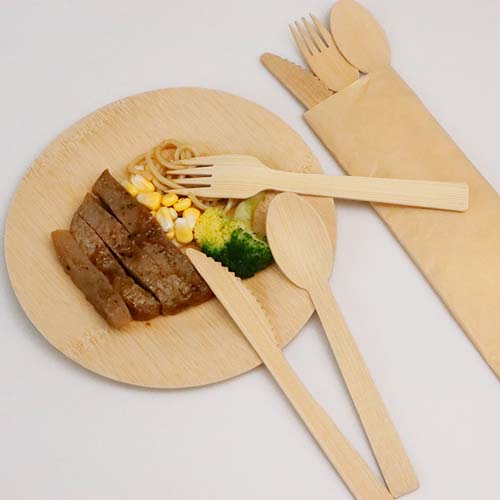
As an experienced compostable food containers manufacturer with 9 years of B2B global supply chain operation history, Hydeeco’s full line of food contact bamboo utensils has passed all required FDA, BPI, EN13432 and FSC third-party audits, with zero customs rejection records for shipments to 31 countries since 2021. We maintain 135 tons of FSC certified raw bamboo stock at all times to ensure stable delivery even during peak holiday demand seasons, and our in-house quality control team runs 3 separate safety checks at raw material processing, surface treatment and pre-shipment stages to eliminate non-compliant products before they leave the factory.
We provide custom size, custom printing, low MOQ support, OEM & ODM service, and bulk wholesale supply for global buyers.
Conclusion
For global B2B buyers looking to phase out single-use plastic cutlery while meeting the latest regional food safety and environmental regulations, properly vetted bamboo utensils are one of the most cost-effective, low-risk options available on the current market.