
If you’ve ever sat down to source bamboo cutlery for your catering operation or retail stock, you’ve probably seen prices jump all over the place. One supplier quotes you 40 dollar for 1,000 pieces, the next hits you with 90 dollar for the exact same count, and no one really spells out why. That’s the gap most B2B buyers run into when they start moving away from plastic tableware: no one lays out the real, on-the-ground costs that make one batch of bamboo forks way more expensive than another. This isn’t generic eco-marketing fluff — it’s the stuff we’ve picked up after eight years working directly with bamboo farms, production lines, and hundreds of global bulk buyers.
What Actually Moves the Price Tag on Bamboo Cutlery
First off, the raw material isn’t just “bamboo.” The cheap stuff you see floating around unbranded marketplaces often comes from fast-harvest 2-year-old bamboo that’s soft, splinters the second you press it into a burger, and warps if it sits in a takeout soup container for 20 minutes. The good, food-safe Moso bamboo that most Western markets require is harvested at 4 to 5 years old, and that adds 25 to 30 percent to the base material cost right off the bat. If that bamboo is FSC-certified from properly managed plantations, that’s another 20 percent premium, no way around it.
Then there’s the processing work no one talks about. The absolute lowest-cost bamboo cutlery gets stamped straight out of thin 1.8mm sheets, no extra work done after it’s cut. You’ll get rough edges, tiny splinters, and pieces that snap if you try to cut through a steak. The mid-range stuff goes through three separate sanding passes to round every edge, no sharp corners left, and that adds 30 percent to the production labor cost. If you want it to hold up to hot food for more than an hour, a food-grade beeswax dip that seals the surface adds another 12 percent on top of that.
Order size hits pricing harder than most new buyers expect. A 1,000-piece small batch means the factory has to stop their full production run, reset the dies, and run a short shift — that’s why per-unit costs jump 40 percent compared to a 10,000-piece order, where all those setup costs get spread across thousands more units.
Real Industry Numbers and Rules You Can’t Skip
From what we’ve tracked across 2024 and 2025, the average wholesale price for a standard 16cm bamboo fork sits between 0.048 dollar and 0.072 dollar per unit. That’s up 7 percent from 18 months ago, and almost all of that jump comes from new global food safety rules that no supplier can avoid cutting corners on forever.
In the EU, Regulation (EU) 2023/2004 now bans any bamboo tableware that doesn’t pass third-party testing for formaldehyde and heavy metal leaching. That testing alone adds 0.003 dollar to 0.005 dollar per piece to every compliant batch, and if you skip it, your entire shipment can get seized at port. For U.S. buyers, FDA 21 CFR Part 176 rules apply, and we’ve seen multiple small importers lose full 20-foot containers of cheap untested bamboo cutlery last year because they tried to skip the certification step to save a few hundred dollar.
Bamboo Cutlery Type & Cost Breakdown
| Product Type | Unit Price (10k Order) | Thickness | Most Common Use Case |
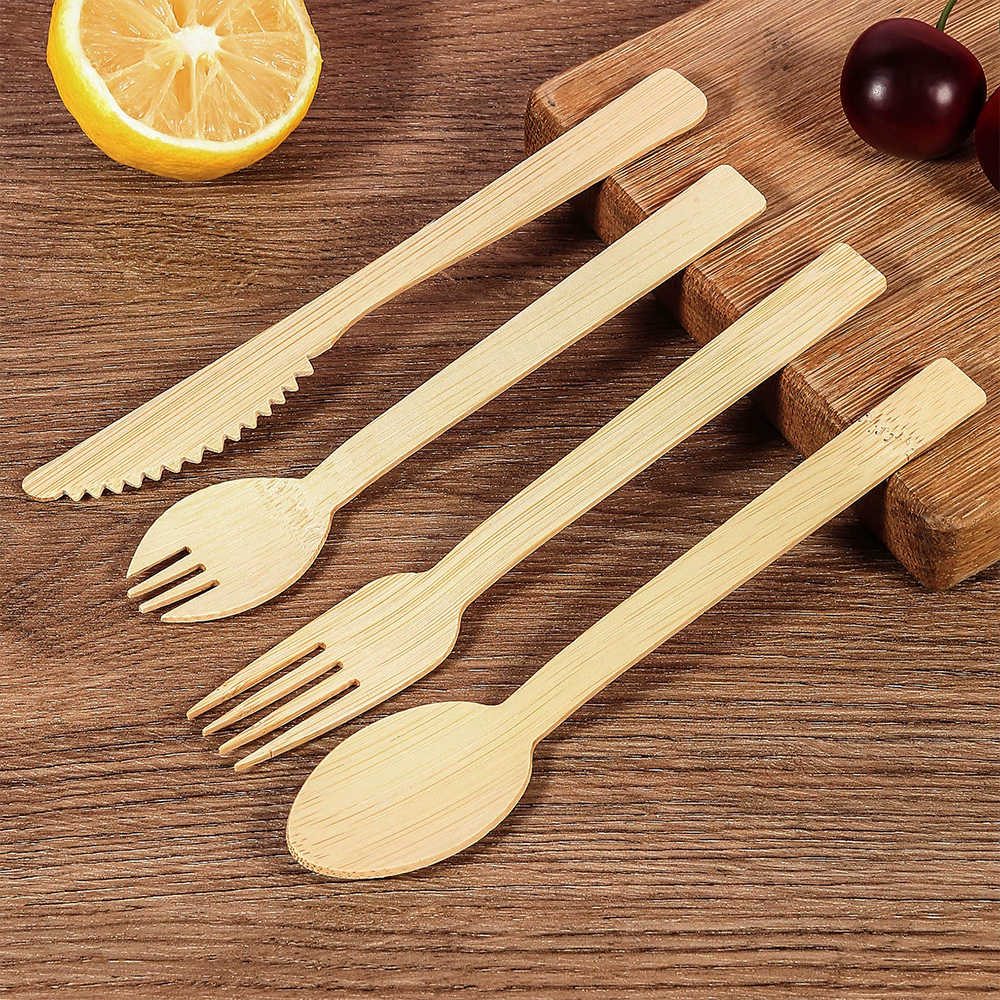
| Basic stamped bamboo cutlery | 0.042 dollar | 1.8mm | Low-volume cafes, quick takeaway delivery |
| Rounded-edge polished bamboo cutlery | 0.061 dollar | 2.0mm | Mid-range restaurants, standard event catering |
| Beeswax coated bamboo cutlery | 0.075 dollar | 2.2mm | Hot soup service, 3+ hour outdoor festivals |
| Custom engraved bamboo cutlery | 0.11 dollar | 2.0mm | Luxury weddings, brand pop-up activations |
No-Nonsense Purchasing Advice for Bulk Buyers
Stop picking the lowest quote first. We’ve had new clients come to us after ordering 50,000 pieces of ultra-cheap bamboo cutlery, only to find 20 percent of the forks bent when their customers tried to cut pasta. That led to hundreds of bad app reviews for their takeaway business, which cost them way more than the 300 dollar they saved on the initial order.
If you’re in a region with plastic taxes, run the numbers: the 18 percent price gap between standard plastic cutlery and bulk bamboo cutlery almost always gets fully offset by the plastic tax fees you would have paid on a large order. For recurring monthly orders, lock in a 6-month contract with your supplier — that lets you skip the 8 to 12 percent price spikes that hit every summer when event season ramps up and bamboo demand surges. If you’re already ordering custom disposable food packaging for your brand, pairing it with matching branded bamboo cutlery only adds a 5 percent total cost premium, and it makes your whole unboxing experience feel way more intentional for customers.
Real Questions Our Buyers Ask Every Month
Q: Is bamboo cutlery always way more expensive than plastic for huge orders?
A: For 50,000+ unit bulk wholesale food packaging orders, the price gap shrinks to under 18 percent in most regions. Once you factor in plastic taxes in the EU, UK, and most U.S. coastal states, bamboo often ends up being the cheaper long-term option.
Q: Can I get custom printed bamboo cutlery without ordering 50,000 pieces?
A: Most generic suppliers lock custom orders behind a 30,000 unit minimum, but flexible eco friendly food packaging supplier teams can often run custom print jobs starting at 10,000 units for a small 10 percent setup fee, no massive overstock required.
Q: What’s the hidden cost no one warns you about when importing bamboo cutlery?
A: Unexpected third-party lab testing fees. If your supplier doesn’t hand over pre-done compliance documents for your market, you can end up paying 300 dollar to 800 dollar per shipment for last-minute testing just to get it through customs.
Why Hydeeco Doesn’t Hide Pricing Fine Print
We’ve been making disposable tableware for 8 years, and we built our pricing structure around the mistakes we saw new buyers make over and over. Every batch of our bamboo cutlery comes pre-tested to meet both FDA 21 CFR and EU 2023/2004 standards, so you never get stuck paying surprise testing fees. We’ve worked with over 1,200 clients — from small town coffee shops to 300-location catering chains — to tweak their bamboo cutlery specs to fit their exact budget, no unnecessary add-ons pushed on you.