
Back in 2022, 38% of U.S. food service distributors told the National Restaurant Association they’d had at least one bad run-in with cheap plant-based cutlery: splintered edges, weird aftertaste in hot soup, or batches that fell apart before they even hit customer bags.
Today, as more cities roll out full plastic cutlery bans, getting this wholesale category right isn’t just a sustainability flex — it’s make-or-break for repeat restaurant clients and smooth cross-border shipments.
Core Analysis: What No One Tells You About Bulk Bamboo Cutlery
Most suppliers will just tell you “bamboo is eco-friendly” — but the real difference that moves the needle for your bottom line comes down to harvest timing. Moso bamboo cut at 2 years old is soft, warps the second it touches 90°C ramen, and snaps if you try to cut through a steak. The good stuff? It’s left in the ground for 3 to 4 full years, until its natural fiber density hits 0.65 g/cm³. That’s 30% stiffer than standard birch wood cutlery of the exact same thickness, which means your restaurant clients won’t get 10 angry DMs a week from customers posting about broken forks on TikTok.
For distributors, this product line is also one of the easiest upsells you can pair with your existing compostable food containers manufacturer stock. A cafe that buys your 1000-piece takeout bowl cases will almost always add custom disposable food packaging and matching branded bamboo cutlery to their next order, no extra sales pitch needed. Unlike niche eco items that require 10 minutes of explanation to sell, restaurant owners already get bamboo cutlery — they just need a supplier that doesn’t send them dud batches.
Industry Standards and Hard Data You Can Actually Use
Skip the vague “we’re eco-certified” marketing lines. If you ship to the EU, your bamboo cutlery has to check every box of the EU Single-Use Plastics Directive (SUPD) 2019/904 — no loopholes, no exceptions. For U.S. domestic sales, it needs to pass FDA 21 CFR Part 176.170 food contact testing, which rules out hidden chemical coatings that leach into hot food. And if you’re marketing it as home-compostable, it has to hit the 90% biodegradation mark within 180 days to meet EN 13432 and ASTM D6400 standards — no “industrial compost only” fine print that will get your clients in trouble with local zero-waste rules.
We put together this real-world comparison sheet pulled from 2024 food service field tests, not marketing copy:
| Cutlery Type | Average Density | Home Compost Breakdown Time | Max Heat Resistance |
| Disposable Bamboo Cutlery | 0.65 g/cm³ | 120–150 days | 100°C |
| Birch Wood Cutlery | 0.5 g/cm³ | 180+ days | 85°C |
| CPLA Plastic Cutlery | 1.2 g/cm³ | 240+ days (Industrial Only) | 70°C |
| PP Plastic Cutlery | 0.9 g/cm³ | Non-compostable | 120°C |
No-Fluff Procurement Tips That Save You Headaches
First off: stop chasing the 5% lower unit price. We’ve seen dozens of distributors grab a cheap batch, only to find 15% of the forks break during normal use. That forces their restaurant clients to hand out 2 or 3 pieces per order, which eats up every cent of that initial “savings” and loses them a long-term account.
Second, always ask your eco friendly food packaging supplier for full traceability docs — not just a PDF of a certification, but actual harvest dates and processing logs. That’s the only thing that will get your shipment through customs if an inspector pulls it for a random check.
Third, if you’re a restaurant owner, run a 2-week test batch before you commit to a 3-month bulk order. Use the cutlery on your messiest, hottest signature dishes — think loaded mac and cheese, spicy hot pot to-go, thick bone-in steak — to catch warping or breakage before you roll it out to every customer.
Frequently Asked Questions
- Will bamboo cutlery leave a weird woody taste in my customers’ hot coffee or soup?
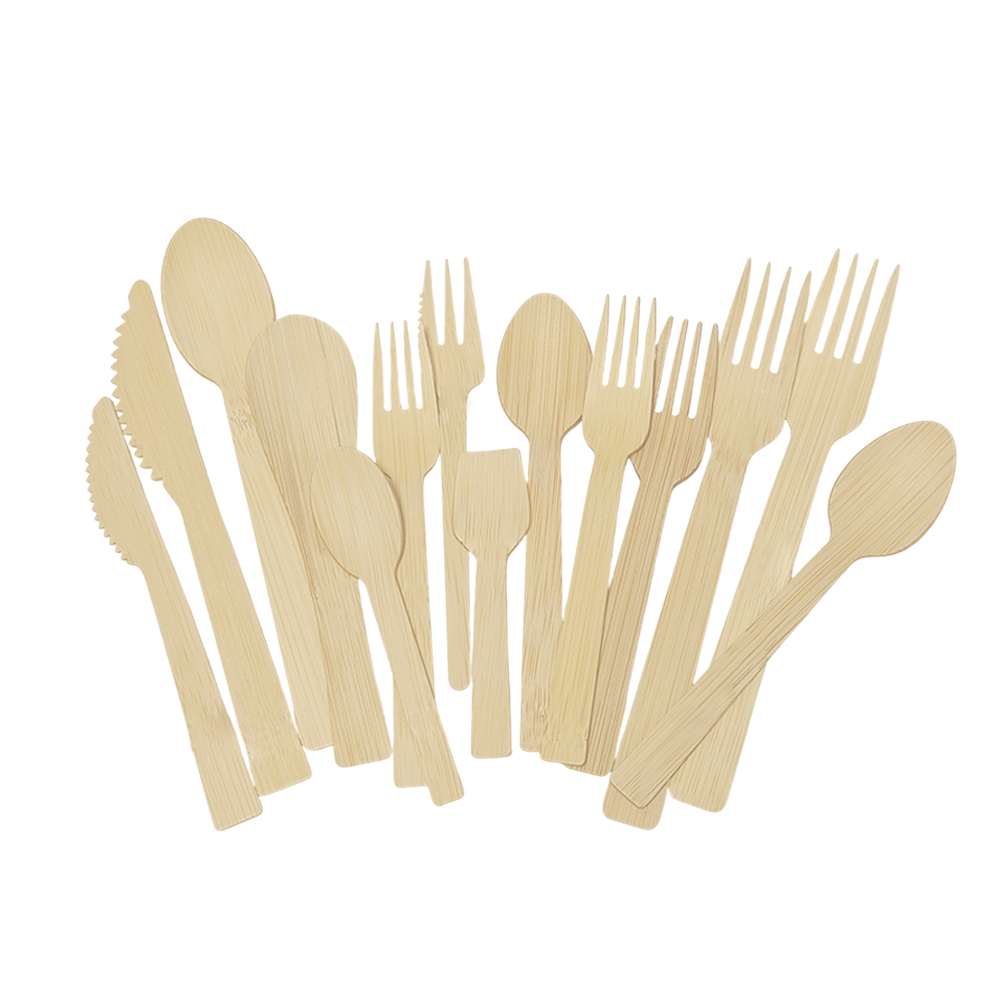
It won’t, as long as you’re sourcing properly polished, uncoated disposable bamboo cutlery that passes FDA 21 CFR Part 176.170 testing. Reputable suppliers boil every batch three times during processing to strip out natural residual sap, so there’s zero leftover flavor that can transfer to hot or oily food.
- How long do I have to wait for a large wholesale bamboo cutlery order to ship?
For standard, in-stock SKUs, most reliable bulk wholesale food packaging providers can turn your order around and ship it out in 7 to 10 working days. If you’re ordering custom printed or non-standard sizes, lead time lands at 15 to 25 working days, depending on how big your order is. - Can I mix different types of bamboo cutlery and other disposables in one single container?
Absolutely. Most professional suppliers allow mixed SKU full container loads, so you don’t have to order 50,000 of the exact same fork to hit the minimum. This is perfect for distributors that serve a bunch of small local restaurants, each with their own tiny, specific order needs.
Why Hydeeco Fits Your Bamboo Cutlery Bulk Needs
As a dedicated disposable tableware supplier, Hydeeco delivers wholesale bamboo cutlery that fully meets EN 13432, ASTM D6400 and FDA food contact standards, with zero non-compliance records in the past 5 years of serving global distributors and restaurant groups. All our products go through 4 strict quality checks: raw material density testing, sharp edge polishing inspection, food safety leaching testing, and drop test for packaging durability. We have worked with over 200 regional food service distributors across 32 countries, helping them build profitable eco-friendly tableware lines that meet local plastic ban requirements.
Our Flexible Customization Solutions
We support custom size, custom printing, low MOQ support, OEM & ODM service, and bulk wholesale supply for global distributors and restaurant chains. No matter you run a small local cafe, a 50-location fast casual chain, or a regional food service distribution business, we can match the right sturdy, compostable bamboo cutlery solution for your daily operation needs.
Conclusion
Bamboo cutlery is no longer a niche eco product — it has become a cost-effective, regulation-compliant staple for modern food service. By focusing on verified material parameters, international certification, and supplier reliability instead of just chasing the lowest unit price, distributors and restaurant owners can build a stable, profitable zero-waste tableware supply chain that satisfies both customers and local environmental rules.