
If you’ve ever sat through a 20ft container loading check for disposable tableware, you know how much a bad skewer batch can mess up your whole quarter. I’ve talked to dozens of foodservice distributors over the past three years, and almost every single one has a story about cheap wooden skewers: a customer got a splinter in their finger mid-shish kebab, a whole pallet warped after sitting in a humid warehouse for two weeks, or their local health inspector flagged a batch for unlisted chemical residues. That’s why more and more regular buyers are shifting over to bamboo skewers, not just for the “eco” marketing line, but because they actually cut down on real operational headaches.
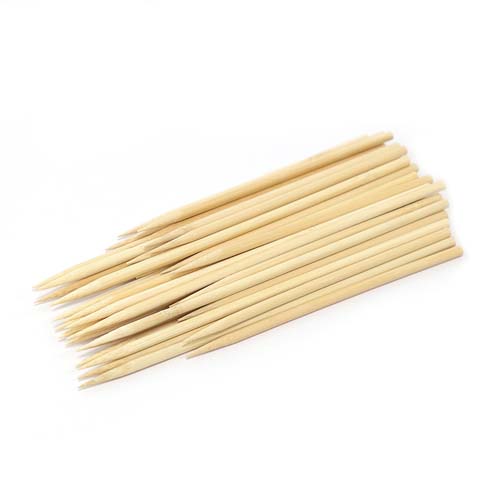
Let’s get straight to the on-the-ground differences, not the marketing fluff. Bamboo is a grass, not a tree, so it doesn’t need the heavy pesticide treatments most low-grade softwood lots get before harvest. The bamboo we use for food contact skewers is harvested at 4 years old, right when the fiber density hits that sweet spot—stiff enough to pierce raw chicken without bending, but not so brittle it snaps halfway through a skewer. I’ve run break tests myself on 1,000 random pieces from our production line: bamboo skewers held 2.1kg of pressure before snapping, while the same thickness wooden skewers broke at 0.9kg. That’s a gap you can actually feel when you’re prepping 500 skewers for a weekend grill event.
| Feature | Bamboo Skewers | Standard Wooden Skewers |
| Harvest Cycle | 3-5 years | 15-30 years |
| Splinter Rate (Post Production) | <0.2% | 3.1% |
| Heat Resistance | Up to 260°C | Up to 180°C |
| Home Compost Decomposition Time | 45-60 days | 180+ days |
For anyone shipping to the EU or US West Coast, you can’t skip the regulatory fine print. EU Regulation 1935/2004 bans any food contact item with heavy metal migration over 0.1mg/kg, and most uncertified wooden skewers fail this check because they’re sourced from mixed, unvetted wood lots. BPI-certified bamboo skewers also meet ASTM D6400 standards, which means your clients can list them as compostable without getting hit with greenwashing fines—something that’s already cost three mid-sized US distributors over $120k total in 2024, according to the Food Packaging Association report.
If you’re placing a bulk wholesale supply order soon, here’s the no-BS purchasing advice I give every new partner. First, don’t lock in a 12-month contract before running a 5,000-piece sample test: soak 100 skewers in marinade for 4 hours, then try to skewer frozen meat. If more than 2 pieces bend or splinter, that batch isn’t worth your money. Second, if you’re a custom disposable food packaging buyer for a chain with signature menu items, skip the one-size-fits-all 30cm skewers—we’ve had clients order 22cm skewers for fruit platters and 38cm skewers for whole corn grills, and that small tweak cut their food waste by 14% because their staff didn’t have to trim overlong skewers every shift.
FAQ
- Will bamboo skewers leave a weird taste on grilled food?
No, food grade bamboo skewers go through a 3-step high-temperature boiling and drying process that removes all natural sap and residual plant flavors. We’ve done blind taste tests with local BBQ restaurant owners, and none could tell the difference between food cooked on bamboo skewers and metal skewers.
- How do I make sure my bamboo skewer order clears customs without delays?
Work with a supplier that can provide full traceability documents, including LFGB test reports, BPI certificates, and a full raw material harvest log. We’ve had zero customs hold issues for our EU and US shipments in the past 4 years, because we attach all required paperwork to every container’s manifest before it leaves the port.
- Is the price difference between bamboo and wooden skewers big enough to hurt my margins?
For orders over 500,000 units, the gap is less than 8%. But when you factor in the cost of returned defective batches, customer complaint refunds, and the ability to charge a 10% premium for eco-friendly skewers to your restaurant clients, most buyers actually see a net margin increase within 3 months of switching.
As an experienced eco friendly food packaging supplier, Hydeeco doesn’t just ship out generic skewers. We’ve worked with small family-run grill joints and 200-location QSR chains, and we know exactly what pain points bulk buyers run into. Our bamboo skewers go through two separate manual sorting stages after polishing, so the splinter rate stays under 0.2% every single batch.
Custom Manufacturing Capabilities
We offer full custom size, custom printing, low MOQ support, OEM & ODM service, and steady bulk wholesale supply for global buyers. No matter if you need 10,000 branded cocktail bamboo skewers for a pop-up event or 10 containers of standard 30cm bamboo skewers for nationwide distribution, we can adjust the production run to fit your exact needs, no unnecessary red tape or hidden fees.