
Every quarter another city or country adds single-use plastic stirrers to its banned-items list.
A coffee shopwith 250–300 customers a day still hands out roughly 90,000 of them annually, each one too light (under 0.7 g) and too short for virtually any recycling plant to capture.
What actually happens next: 96–98 % are screened out and sent directly to landfill or waste-to-energy plants. There they either remain chemically stable for centuries or gradually fragment into microplastic particles now routinely detected in rainwater, farmland soil, seafood, and human bloodstreams.
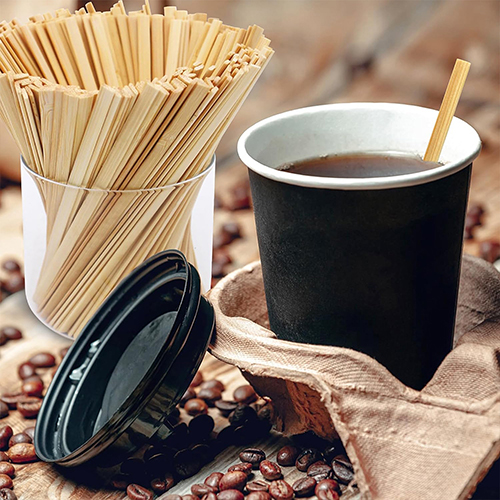
For coffee shop owners, stocking petroleum-based stirrers has quietly shifted from “default” to “risk.” Regulations are tightening, guests increasingly notice and comment, and the numbers no longer favor plastic: certified birch stirrers cost less per thousand, eliminate disposal headaches, and break down completely in commercial composting cycles. The evidence has removed any real debate.
The Hidden Cost of Those Tiny Plastic Sticks
They’re practically weightless, which is exactly why recycling plants hate them. Anything under 5 cm usually falls through the sorting belts and gets treated as “residue.” Bottom line: they go straight to landfill or get burned. A hundred years from now, today’s stirrers will still be around—just broken into invisible flecks that leach into soil, ride ocean currents, and end up inside the mussels and tuna we eat for lunch.
Wooden vs Plastic: A Head-to-Head That Actually Matters
| Feature | Plastic Stirrers | Wooden Stirrers |
| Made from | Fossil-fuel derivatives | Birch from certified sustainable forests |
| Time to disappear | 400–1000 years (practically forever) | 90–180 days in commercial compost |
| Risk of snapping | Often bends or cracks | Steam-bent & kiln-dried = almost unbreakable |
| Performance in hot drinks | Softens, sometimes leaves aftertaste | Handles boiling water with zero issues |
Step-by-Step: How to Switch in One Weekend
- Count your current daily usage for 7 days.
- Order one test box of Hydeeco wooden coffee stirrers.
- Replace only the stirrer jars at the condiment bar — no staff training needed.
- Add a tiny table tent that says “We switched to compostable wood — thanks for noticing!”
- Watch the same customers who never comment suddenly smile and take photos.
The Surprising Side Effect Most Owners Notice First
Within two weeks, almost every coffee shop reports the same thing: people stop asking for spoons. A proper wooden stirrer is strong enough to mix oat milk and three sugars without bending, so you save on metal spoon washing too.
Switching to wooden stirrers isn’t about being perfect. It’s about choosing the one item that’s undeniably better for the planet, cheaper in bulk, and quietly makes your customers feel good about ordering from you instead of the chain across the street.
Ready for the easiest green upgrade you’ll make all year? Start with a single box of Hydeeco wooden coffee stirrers and see the difference before you commit to thousands.