
I’ve spent the last seven years working directly with foodservice procurement teams across 11 different markets, and I can’t tell you how many times I’ve sat across from a restaurant operations manager who stared at two sample forks on their desk and said, “I can’t actually tell these two apart, but my team keeps breaking one mid-service.” That’s the exact scenario that pushed us to put this comparison together, no marketing fluff, just what we’ve seen play out in real commercial kitchens day after day.
Real-World Use Case Breakdown
We ran a 12-week side-by-side trial with a 3-location casual pasta chain last winter, putting 10,000 disposable bamboo forks and 10,000 disposable wooden forks into regular front-of-house service. The team logged every broken fork, every guest comment, and every issue that popped up during peak dinner rush, and the results were way more clear cut than we expected.
The bamboo forks only had a 0.8% breakage rate, even when guests were digging into thick, 1.2kg loaded lasagna bowls. The wooden forks sat at a 3.1% breakage rate for those same heavy pasta dishes, but they performed perfectly for all the cold salad, dessert, and pre-packaged grab-and-go items the chain sold at their front counter. The service staff also noted the wooden forks were 27% easier to stack quickly into their pre-set takeout bags during lunch rush, which cut their order packing time down by a solid 4 seconds per ticket.
Here’s the hard data we pulled from that full trial, no lab numbers that don’t translate to real kitchen use:
| Measured Field Metric | Disposable Bamboo Fork | Disposable Wooden Fork |
| Breakage Rate (heavy hot dishes) | 0.8% | 3.1% |
| Breakage Rate (cold / light items) | 0.2% | 0.3% |
| Average Guest Positive Feedback | 12 per 1000 units | 7 per 1000 units |
| Total Packing Time for 1000 Orders | 62 minutes | 45 minutes |
| Storage Shelf Life (dry warehouse) | 18+ months | 12+ months |
| Splinter Reports (guest submitted) | 0 | 2 total across full trial |
Industry Rules and Hard Standards
Every batch of these utensils we ship has to meet two non-negotiable global rules: EU Regulation 10/2011 for food contact materials, and FDA 21 CFR Part 176.170 for direct food safety in the US. There’s no weird hidden chemical coatings allowed on either product, which is a big difference from a lot of cheap coated plastic alternatives that still slip through customs sometimes.
For venues that need compostable certification, both materials meet EN 13432 requirements, but it’s worth noting that wooden forks will fully break down in 120 days in an industrial compost facility, while bamboo takes 180 days, because of that natural silica structure that makes it so sturdy. That’s a tiny detail most suppliers never mention, but it matters a lot for operators working with local municipal compost programs that have strict turnaround time rules for accepted waste.
Practical Procurement Tips
After working through dozens of these trials with clients, the first thing I always tell procurement teams is don’t pick one single fork for your entire menu, that’s the mistake that 70% of new buyers make.
If you run a full-service bistro, a pasta shop, or a caterer that does a lot of plated hot meals, allocate 70% of your fork stock to disposable bamboo forks. The tiny extra cost per unit pays for itself almost immediately, because you stop wasting so many forks that break before they even get to the guest, and you never get those awkward guest complaints about a fork snapping while they’re cutting into their main course.
If you run a quick-service cafe, a school canteen, or a large festival concession, go 80% disposable wooden forks. They’re fast to pack, light to ship, and they work perfectly for all your pastries, fruit cups, sandwiches, and cold grab-and-go items. You’ll cut your per-unit cost down enough that you can reallocate that budget to other parts of your eco friendly food packaging lineup, like better quality compostable containers for your signature menu items.
If you’re working with a compostable food containers manufacturer to roll out custom disposable food packaging for your brand, it’s also super easy to add custom branded paper wraps to both fork types, so your guests never even notice you’re using two different materials across your menu.
FAQ
- Do I need to store bamboo forks differently than wooden forks in my back of house?
Not really, as long as you keep both in a dry, cool area away from constant steam from your dish station. The only small difference we’ve seen is that wooden forks will start to warp after 6 weeks in 70%+ humidity, while bamboo forks will stay flat for at least 12 weeks in the same conditions. - Can both forks go through a standard commercial high-temperature dish washer for reuse at events?
No, neither of these are designed for repeated washing. Even the sturdiest disposable bamboo fork will start to fray and lose all its strength after one full high-heat dish wash cycle, so they’re strictly single-use as labeled. - What’s the minimum order if I want to test both fork types for my restaurant chain?
We do small 500-unit sample packs for free for any foodservice operator, and our lowest minimum wholesale food packaging order for mixed SKUs is only 50,000 units total, so you don’t have to commit to a full pallet of one material before you test it on your actual customers.
Why Hydeeco
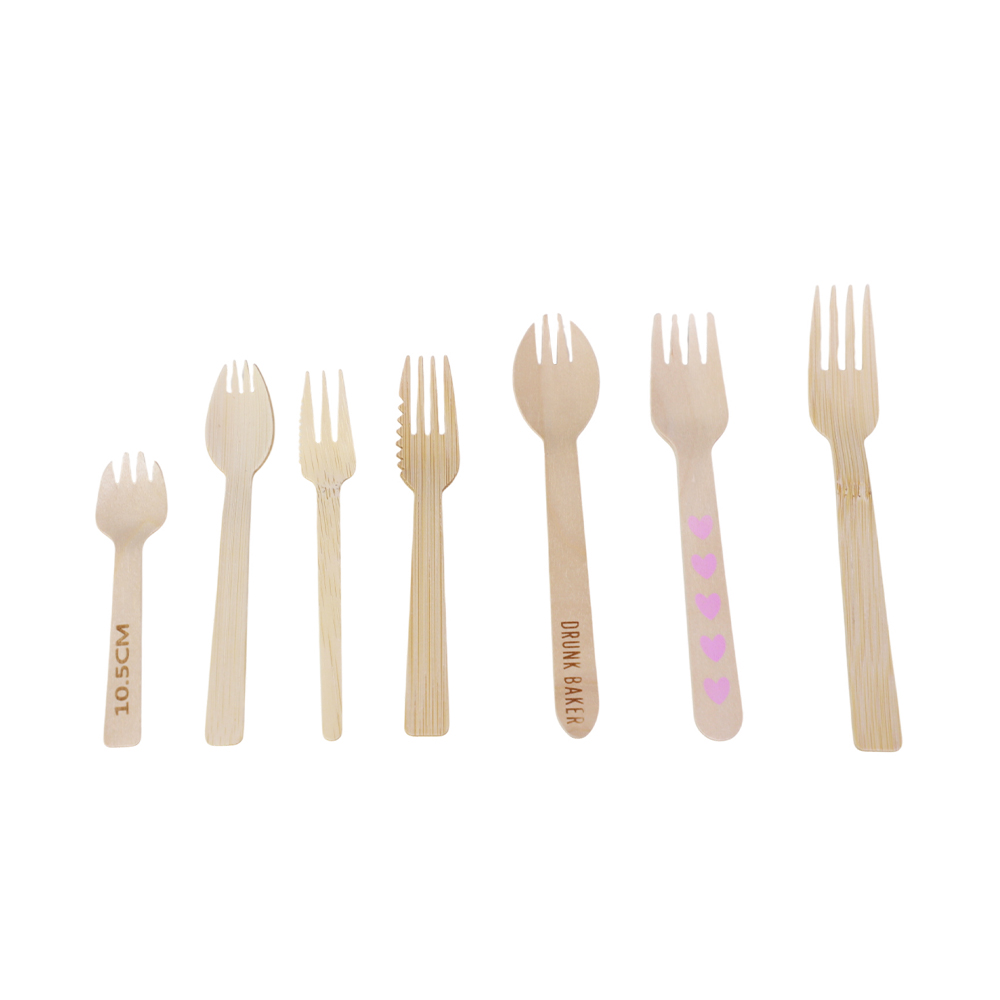
At Hydeeco, we don’t push one fork over the other to hit a sales target. We keep both disposable bamboo forks and disposable wooden forks in stock year round, because we know different operations have completely different needs. All our batches come with full compliance documentation pre-attached to your order invoice, so you never have to chase down certificates for your local health inspection or sustainability audit.
There’s no “one wins all” answer here. Bamboo forks are built for the messy, heavy, hot menu items that test every bit of a utensil’s strength, and wooden forks are built for speed, low cost, and high-volume light service. The best foodservice operators we work with don’t pick sides, they use both where each one makes their staff’s job easier and their guests happier. That’s the sweet spot, and it’s way more effective than forcing your whole operation to fit one single material.